We flew to Nosy Be via Addis Ababa overnight with Ethiopian Airlines, then took a pre-booked taxi to Nosy Lodge.
We were allocated 2 rooms on the ground floor, facing the sea.
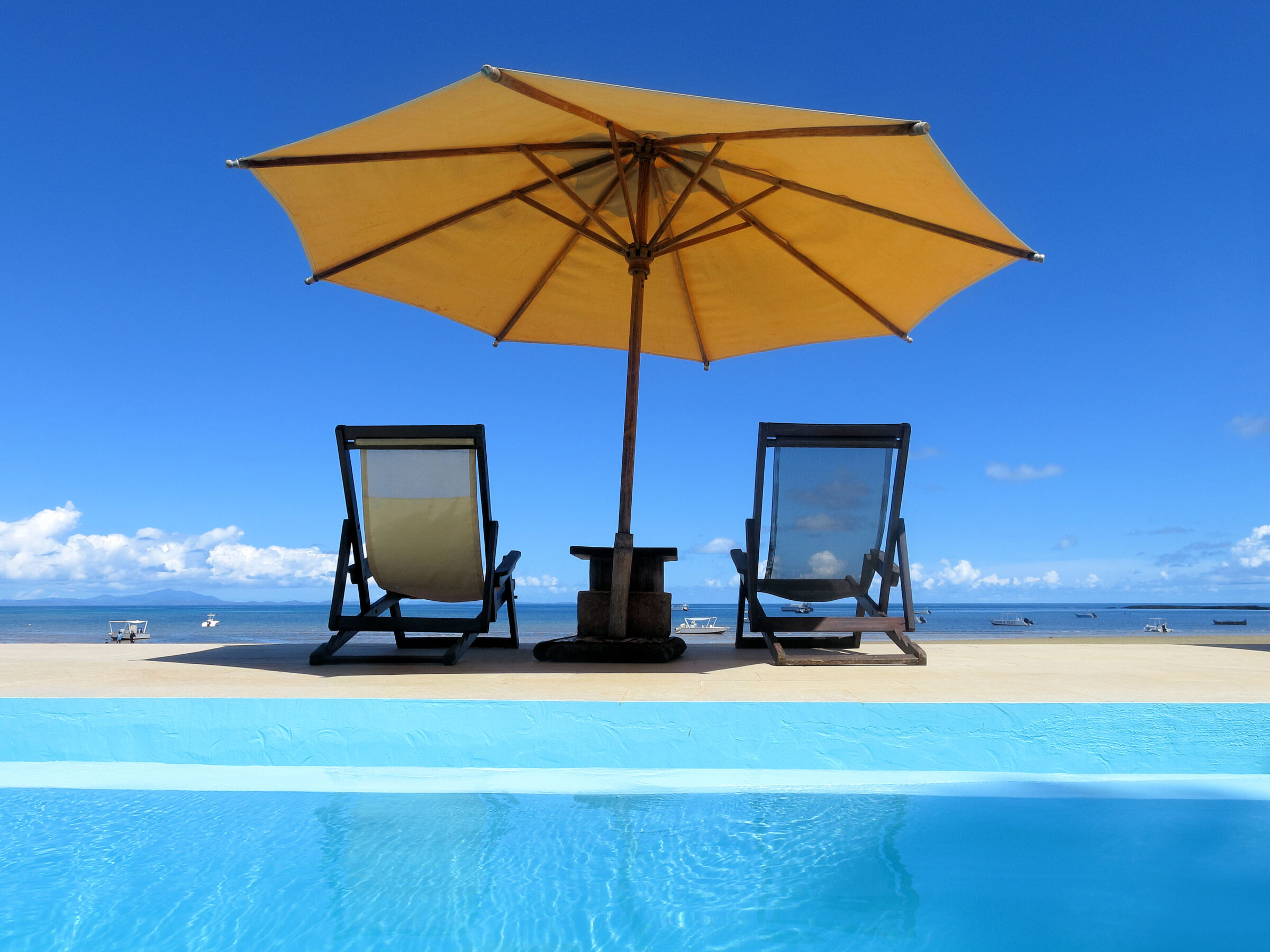
Nosy Lodge is fairly small, with 24 rooms, a garden area, leading to the pool, overlooking the beach and has a restaurant/lounging area.
The dive centre, Dive Nosy Be was located right next door to the accommodation and the boats launched from the beach. The boats normally took 8 divers plus crew and a couple of dive guides.
Most of the diving was on reefs, topping out at a depth of between 12 & 15m, with a couple of dives on small wrecks, on a bottom depth of around 30m. These dives required an ascent to 5-6m for a safety stop at the end. There was a dive in the nature reserve at Tanikely island at the end of the holiday where we were able to complete the dives in the shallows.
Generally in the area there were a lot of very large gorgonian fans and usually some corals with the occasional reef dropping away to a sandy seabed.
Around the reefs we regularly encountered huge shoals of yellow snappers and congregations of sweetlips. There were a lot of large groupers and pufferfish. Particularly on the wrecks there were a lot of crocodile fish, scorpionfish and stonefish on the gunwales and the decks, as well as lionfish, batfish, and shoals of sailfin rubberlips around the deeper parts of the wrecks, with many large rock lobsters hiding in the crevices below.
Lemuria Land is a park located in the southern part of Nosy Be. Surrounded by an ylang-ylang grove. The park is home to various species of animals including lemurs, crocodiles and chameleons snakes and tortoises.
Lokobe Reserve, on the island of Nosy Be in Madagascar, is the last remaining primary forest in the region, known for being home to the rare black lemur and the Nosy Be panther chameleon.
We began by paddling a traditional dugout canoe through the mangroves and across to Lokobe (about 45 min), then were allocated a guide who led us through the forest. He found snakes, geckos, frogs, chameleons, including the recently discovered micro or nano chameleon and, lemurs including a couple of mouse lemurs, the Nosy Be sportive lemur and a couple of troupes of black lemur. Despite their name, only the males in this species are black, the females are a red-brown colour. After exploring the jungle for a couple of hours we had a meal there then returned home but this time we were towed home by another canoe with an outboard motor.